Settling in with the Philippine community

scjusa's avatarWalk with us!

SCJ Formation House, Cagayan de Oro SCJ Formation House, Cagayan de Oro

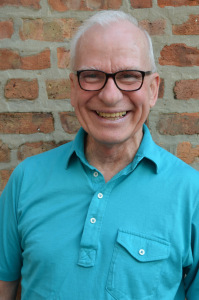
As noted previously, Fr. Tom Cassidy is in the Philippines for the next few weeks, teaching English. The following are recent reflections that he wrote for our province blog:

April 25, 2014: SCJ Formation House, Cagayan de Oro:

It is now 09:00 and later today I will meet with the students so I’ll save talking about them until tomorrow. I’ll try to explain the building complex that will be my home until early June. This is indeed a formation community as there are three levels of formation that take place here before the students move on to the novitiate and then to Manila for their theological studies. Here are the levels:

1. Postulants — these men are preparing to enter the novitiate the program in most provinces lasts for a year.

2. Aspirants — these men are studying philosophy at Xavier University and will…

View original post 1,067 more words

First day in the Philippines

scjusa's avatarWalk with us!

From India to the Philippines. After a short break at home for Holy Week and Easter Fr. Tom Cassidy is back in Asia, this time the Philippines, where he will be assisting with the English program there. This is the first of his blog posts from the region. 

Dehon House, Manila Dehon House, Manila

It is now late afternoon as I am completing my first day in the Philippines. Today is a recovery day from my travels and tomorrow I’ll fly down to Mindanao to begin my time as English teacher. Actually, if I am correct, it would be better to say Assistant English Teacher. As I understand my job it will be to work on pronunciation with the students, but time will tell as to what my real duties will be. I did come prepared with several texts thanks to Kelly Kornacki who heads the ESL program (English as a Second Language)…

View original post 832 more words

Admission to the Novitiate

On March 25, 2014 – the Solemnity of the Annunciation of the Lord, eight Postulants were admitted to the Novitiate. Five of them (Rolly, Felix. Rene, Mark and Chadee) are Filipinos and three (Son, Hung and Dinh) are Vietnamese. The ceremony of acceptance took place during the concelebrated Mass at the Novitiate, Fr. Dehon in Lower Lucoban, Dumalinao in Zamboanga del Sur Province. During his homily Fr. Francis Pupkowski, the superior of the Philippine Region said:  “Today, eight of  you start your fifteen month Novitiate. It is not an accident that we are here; it is a God’s call… God called us here, because He has many and meaningful plans for each one of us… many interesting and inspiring tasks… He firmly believes that we can do something special for Him. So, let us place ourselves at the disposal of God. Like Mary let us give our full cooperation and unconditional collaboration as we say “Ecce Ancilla” – favorite expression of Fr. Leo Dehon, “Lord, let it be done according to your will.”

Novitiate is a time of preparation to become a member of the congregation by professing three vows of Chastity, Poverty and Obedience. It is also a time of discernment if one was called to religious life in the community.  It often includes times of intense study, prayer, living in community, studying the vowed life, deepening one’s relationship with God, and deepening one’s self-awareness. It is a time of creating a new way of being in the world.


Regional Assembly 2014

Regional Assembly 2014Cagayan de Oro City, Philippines

The presence of the congregation of the Priests of the Sacred of Jesus (SCJ) in the Philippines marks its 25th anniversary this year.  All these times the group traditionally holds its annual assembly every January, to share, reflect, evaluate and plan for the future.  For 2014, our assembly was set from the 6th to the 10th.  At this moment, the gathering is on its fourth day.  As customary, the assembly starts with a recollection and confessions.   During the first day, the group listened to the personal sharing of Engr. Antonio Sevillano, a lay leader in the Archdiocese of Cagayan de Oro.  He shared about his experiences with priests and the perceptions and expectations of the lay faithful of the clerics. His major points can be summarized into three themes: Holiness, Presence and Good Homilies. Indeed the group finds the sharing very profound and challenging. Then we continued with the usual personal sharing, giving emphasis on the reflection regarding our 25 years presence, especially in the aspect of internationality, inculturation and hope. After a full day of personal sharing, we proceeded with the reporting by commission (pastoral, social, spiritual, and others). Today, we are having a morning off so we can go to one of our mission areas in the archdiocese to join in the celebration of the parish feast day. Meeting will resume in the afternoon. We ask you to continue praying for us and our mission here in the ‘only Christian nation in the far east’ – the Philippines.

By Fr. Arthur Guevara, scj

Misa de Gallo in Kananga, Leyte

The Holy Family Parish in Kananga, Leyte experienced nostalgia and yet great joy in celebrating Christmas following Yolanda’s aftermath.  Last December 14 to 25, 2013, the Dehonian mission team of the Manila community composed of five scholastics from different stages of formation, namely, Bros. Nathaniel Robilla, Jose Patro Gier, Joseph Muego, Rogereve Pausanos, Dennis Macasero and Fr. Delio Ruiz,scj, our formator, spent eleven days in Holy Family Parish, Kananga, Leyte. We were warmly welcomed by Fr. Gil Logramonte, the Parish Priest, who gave us the privilege of witnessing Christ in the community of Kananga by living with them and celebrating Misa de Gallo (dawn mass) in the different chapels.

When we landed in Tacloban airport, we saw the place completely devastated by typhoon Yolanda. The Leyteños suffered the worst of Yolanda’s wrath which is the strongest typhoon thus far that ever hit the Philippine area of responsibility according to Pagasa statistics. We have seen for ourselves the havoc created by Yolanda on the town’s socio-economic condition. We witnessed some people queuing for relief goods and begging for food to anyone who passed by the roadside.

As we went around the different towns of Leyte, we observed that the coastal areas had been obliterated by the typhoon. I could just imagine the chaos, struggle and confusion in looking for a place of refuge at the height of Yolanda’s landfall in Leyte that fateful day. Wherever I looked I could find debris and ruins. The places affected looked like a war zone wherein buildings and houses have been completely destroyed and flattened to the ground as if a nuclear bomb hit the place.

As Tacloban and other coastal towns were inundated with the surge of sea water, Kananga only experienced the strong wind that carried away the roof of their houses and uprooted coconut trees, and the like.  Fortunately, the Energy Development Corporation (EDC), the well-known and biggest geothermal plant in the world located in Kananga that produces electricity for Visayas and Luzon, was able to resist and withstand Yolanda with few casualties. At present, EDC continues to provide light and power for the people in their yearning for quick restoration and rehabilitation.

I witnessed that the community maintained their resilience in facing life after the catastrophe, in the midst of rubbles and destructions. They remained strong like an acacia tree and rose up from desolation similar to a bamboo that bounces back after the passing of the strong wind.

“We are roofless, homeless but we are not hopeless” is the most touching slogan that I have read while visiting the places around Leyte. These words empower and give them hope to rebuild their life anew. I encountered people who were nostalgic of what had happened but few words of inspiration moved them to look forward to the future.

The community was sentimental but manifested greater joy of what is ahead of them. Celebrating Misa de Gallo ignited their spiritual nourishment, to stand firm and remain strong in their faith as we commemorate the birth of Christ in the midst of affliction. Rainy or fair weather, the church was overflowing with the faithful during the celebration of the dawn masses.

After the Misa de Gallo, all of us enjoyed partaking of the Pinoy traditional early morning snack which is called pandesal (bread) with matching hot coffee. I could skip breakfast but no way would I miss eating together with the elders and kids. The little bread we shared and the coffee we sipped were more precious moments than those I have experienced in classy coffee shops. The exchange of different survival typhoon stories was meaningful for me.  It was an opportunity for debriefing them from their traumas and the horrors they suffered because of Yolanda.  While they exchanged stories, they realized that amid their horrifying experience they recognized how God worked in their lives. As I listened to their stories, I was enraptured with joy when I heard their reflections.  It was for me a visible encounter of a true Eucharistic celebration… of what Jesus did with his disciples after the resurrection in the Galilee account. I witnessed that Christ was in their midst listening to their stories while sharing bread and coffee with one another.

Aside from Fr. Gil and Fr. Delio, SCJ, who celebrated Misa de Gallo in the different chapels, we, the scholastic brothers, were given the chance to celebrate the anticipated Liturgy of the Word in Barangays Tagaytay and Lim-ao.  These are places that could hardly be reached by the priests because of their tight schedules. Five of us brothers have been able to experience celebrating the Liturgy of the Word in two of the dozens of roofless chapels. When it rained, umbrellas were handy even inside the chapel. The nourishment of the Word of God had moved them to strengthen their solidarity with their neighbors in order for them to rise up and rebuild the new community that Christ has longed for.

After the Misa de Gallo, we had the chance to distribute the relief goods courtesy of the different organizations such as Sanlingkod ng Bayan, a Jesuit foundation, and Sagip Kapamilya of ABS-CBN Foundation and similar institutions. The goods were distributed to the different barangays that could not be reached by any relief operation. Our conversation with the survivors and words of encouragement lightened up their faces, and hopefully moved them to rebuild their lives.

The Kananga community may be roofless and homeless, but the spirit of Christmas dwells in their hearts… They remain hopeful. They may be melancholic because of their horrible experience, however, our stay and encounter with them during the MIsa de Gallo may have reminded them of the incarnation… that the Word was made flesh and dwelt among His people. This experience may be reminiscent of the true Eucharistic celebration that gives life and hope to the people.

The Misa de Gallo is celebrated at dawn and right after is the rising of the sun, emanating light to the world… a recreation of a new day.  May the Misa de Gallo be a symbol and source of hope, faith and life of the Kananga community.

Bangon Kananga! (Arise, Kananga!)

Merry Christmas!

By Bro. Nathaniel D. Robilla, scj