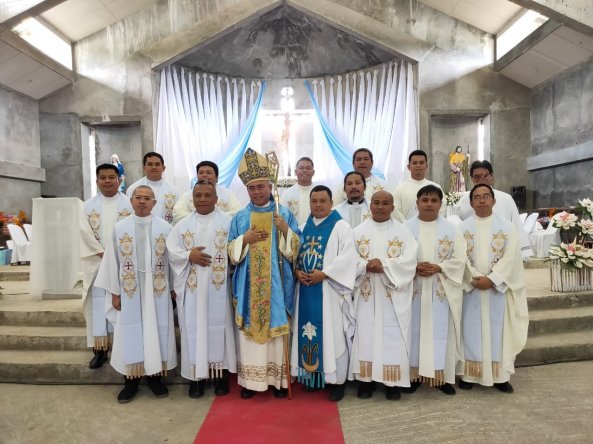
 On November 30, 2019, the Our Lady of Miraculous Medal Quasi-Parish in Talisay, Hilongos, Southern Leyte, was elevated to the rank of a parish. The declaration was made by the Most Rev. Precioso D. Cantillas, SDB, D.D., the Bishop of Maasin, during the concelebrated Holy Eucharist. Also, during the same ceremony, the bishop has installed Fr. Arthur Guevara, SCJ, as a Parish Priest of the new parish. The celebration was a part of the 3rd Feast of the Patron and was preceded with nine day Novena and other activities.
In the Roman Catholic Church, a parish is a stable community of the faithful within a particular church, whose pastoral care has been entrusted to a parish priest, under the authority of the diocesan bishop. It is a territorial entity constituting a division within a diocese.
The parish is where the Church lives. Parishes are communities of faith, of action, and of hope. They are where the gospel is proclaimed and celebrated, where believers are formed and sent to renew the earth. Parishes are the home of the Christian community; they are the heart of our Church. Parishes are the place where God’s people meet Jesus in word and sacrament and come in touch with the source of the Church’s life.
The official SCJ presence in the Diocese of Maasin started on June 11, 2016, when the local bishop entrusted to the Congregation of the Priests of the Sacred Heart (SCJ) a part of the Immaculate Conception Parish in Hilongos, the St. Pope John Paul II Southern Mission Territory, with its main chapel in the Barangay Talisay, later on Miraculous Medal Quasi-Parish. At the moment there are three SCJs assigned there: Fr. Arthur Guvera, Fr. Christopher Alburo and Fr. Josepatro Gier, Jr.
On January 1, 2018, with the ground breaking ceremony, the parishioners of Talisay started construction of their new parish church, which at the moment is at the stage of its completion.
The celebration was attended by the Regional Superior Fr. Lukas Hadi Siswo Sasmito, SCJ, the Regional Secretary and Treasurer Fr. Joseph Butlig, SCJ, Fr. Elpidio Luza, SCJ, the Parish Priest of Bagong Silang, diocesan priests, religious from different congregations and parishioners. As usual, it ended at the table filled with the different kinds of food.



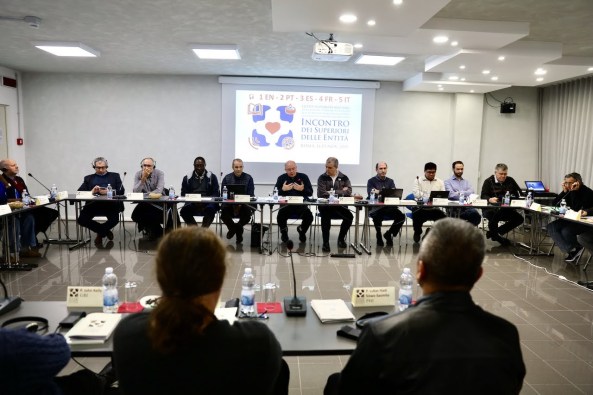 The New Superiors Meeting was followed by the Entity Superiors Meeting. It was held at the SCJ Generalate in Rome on November 11 – 15, 2019. In between there were two important events organized by the Dehonian Studies Centre (CSD): International Dehonian Theological Commission (CTID) meeting and the International Conference on the Sacred Heart Devotion titled “Sacred Heart Devotion: Memory – Body – Image – Text; Continuity and Discontinuity.”


 Like in the previous years, on November 1, 2019, parishioners of the Immaculate Conception Parish in Aluba, Cagayan de Oro, took part in a “Parade of Saints” to celebrate All Saints’ Day. The parade is a counter-culture activity to the pagan celebration of Halloween and an avenue of catechizing children at an early age, and families, about the lives of the saints.


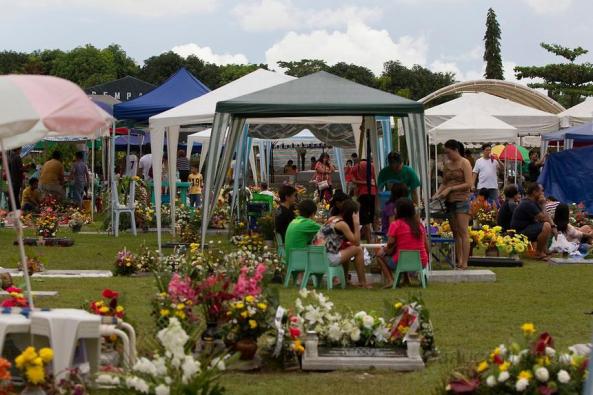
 The Solemnity of All Saints’ Day, also called All Hallows Tide, All Hallomas, or All Hallows’ Day, on November 1, is a celebration of all Christian saints, known or unknown, canonized or beatified, but more particularly those who have no special feast days of their own. In many countries, including the Philippines, All Saints’ Day is not only for remembering the saints, but also for honoring and paying respects to departed relatives and friends, through prayers, floral and food offerings, vigil, and lighting of candles at gravesites. For Catholics, it is a holy day of obligation, as they go to Mass and participate in ceremonies for the dead.


 SCJ Philippines Region