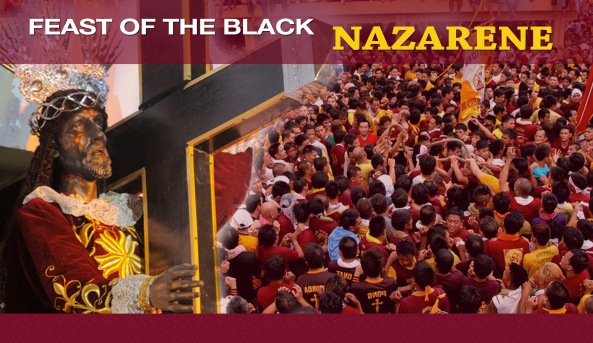
 Feast of the Black Nazarene, a miraculous statue of Jesus Christ carrying his cross, is one of the most popular religious celebrations in the Philippines. Every January 9 thousands of people join the celebrations in Quiapo Manila and Cagayan de Oro City, where the replica of the original statue is located.
The Black Nazarene represents Christ’s passion and suffering, and through the centuries it has become the Filipino people’s symbol of struggle and faith. Devotees have experienced numerous instances of answered prayers and miracles, making the devotion to the Black Nazarene one of the strongest spiritual and religious phenomena in the country.
It is said that the Black Nazarene was carved by an unknown Mexican sculptor from a dark wood in the 16th century in Mexico and then transported via galleon from Acapulco, Mexico to the Philippines on May 31, 1606. According to some stories, a fire that broke out inside the ship reached the statue and blackened even more the image.
It was brought by a group of Augustinian Recollect missionaries who brought it to the Church of San Juan Bautista in Bagumbayan (Saint John the Baptist Church at Luneta). After a couple of years, the Black Nazarene was moved to a bigger church near the area.
On January 9, 1767, the image of the Black Nazarene was transferred (Traslacion) to Quiapo Church (Minor Basilica of the Black Nazarene) whose patron is also John the Baptist. Since that time, the annual feast day has been celebrated by millions of devotees thronging to touch the icon and lasting for around 20 hours.
Black Nazarene is also the patron saint of the Chaplaincy in Dansolihon, Cagayan de Oro City, administered by the SCJs. The feast, which is also celebrated on January 9, was preceded with 9-day novena as a spiritual preparation for the main celebration. Each day, there was a special Novena Mass and procession with the little statue of Black Nazarene around the village of Dansolihon.
The main celebration on January 9, 2019, was held in the new church and was presided by Monsignor Florencio “Boy” Salvador, SSJV, the parish priest of St. Francis Xavier Parish in Pueblo, Cagayan de Oro Cty. The day before, on January 8, 2019, the Archbishop of the Archdiocese of Cagayan de Oro, Most Rev. Antonio J. Ledesma, SJ,DD. administered the Sacrament of Confirmation to the 220 young Catholics from different communities of the chaplaincy.

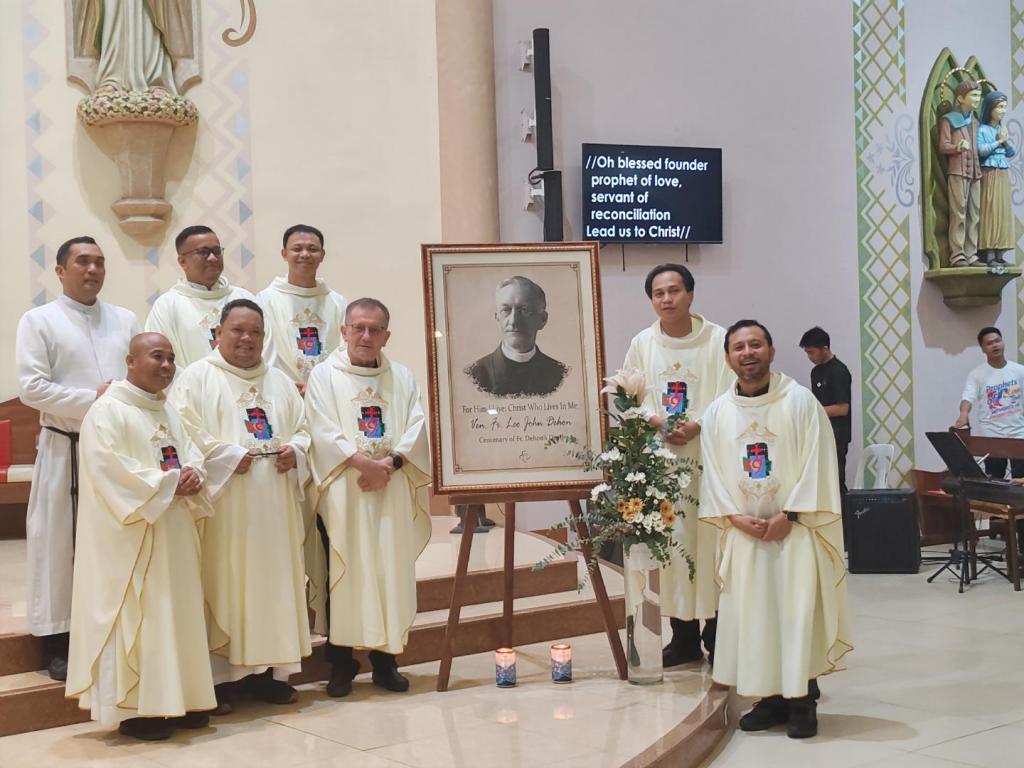
 Three bishops and more than twenty priests, both diocesan and religious, took part in the concelebrated Holy Mass during which the Jesus Nazareno Quasi-Parish in Dansolihon was declared a Parish. The Eucharist presided by Most Rev. Jose A. Cabantan, D.D., the Archbishop of Cagayan de Oro started at 9:00 o’clock in the morning on February 18, 2023. The archbishop was accompanied by Most Rev. Antonio J. Ledesma, SJ. DD., the Archbishop Emeritus and Most Rev. Vilsom Basso, SCJ, DD, the Bishop of Imperatriz Diocese in Brazil.


 SCJ Philippines Region