
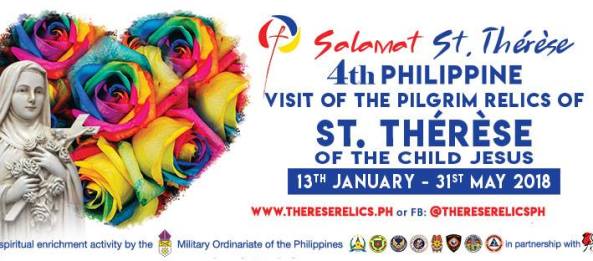
The pilgrim relics of Saint Thérèse of the Child Jesus is for the fourth time in the Philippines. It arrived on January 13, 2018, and will stay until May 31, 2018, visiting different dioceses and parishes.
At the moment the relics is visiting the Diocese of Pagadian. On April 24, 2018, the relics, for a short time, visited the St. Isidore Parish in Dumalinao run by the SCJs.


The pilgrim relics of Saint Thérèse have visited the Philippines in 2000, 2008 and 2013.
Saint Thérèse of the Child Jesus, also called Saint Thérèse of Lisieux, was born on January 2, 1873, in Alençon, France. She died on September 30, 1897, at the age of 24.


She is one of the most popular Catholic saints. As a doctor of the church, she is the subject of much theological comment and study, and as an appealing young woman, whose message has touched the lives of millions, she remains the focus of much-popular devotion.
Relics are the material remains of a saint or holy person after death, as well as objects sanctified by contact with his or her body.


Real or first-class relics include the skin and bones, clothing, objects used for penance and instruments of a martyr’s imprisonment or passion, while representative relics are objects placed in contact with the body or grave of a saint.
The Catholic faithful venerate the relics of saints because as intercessors with God for the living, through their relics—a record of the saint—God manifests his presence.
 On April 19,2018, at the Butuan Doctors’ Hospital, passed away Most Rev. Zacarias C. Jimenez,D.D, an Auxillary Bishop-Emeritus of the Diocese of Butuan, and big friend of SCJs (Dehonians) in the Philippines.
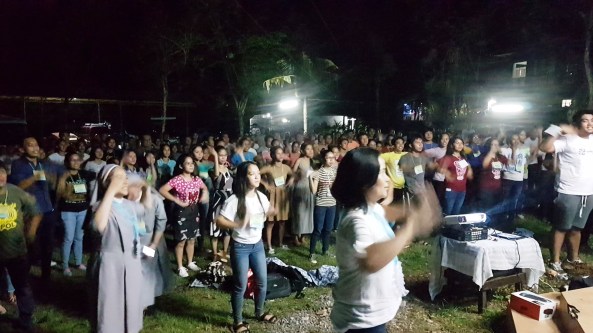 On April 21, 2018, more than 750 youths coming from different parishes of the Archdiocese of Cagayan de Oro attended the Vocation Jamboree prepared by the Directors/Directresses of Vocations in the Philippines (DVP) Cagayan de Oro Chapter, headed by the Rev. Fr. Roger Gabac, SSJV, the Archdiocesan Vocation Director with the cooperation of the members of DVP represented by different Religious Men and Women that works in the Archdiocese of Cagayan de Oro.

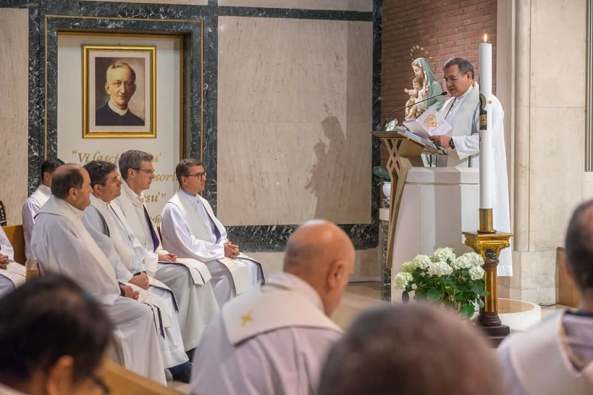 From April 16 – 20, 2018, the Dehonian formators, particularly the rectors of the scholasticates, are meeting in Rome to discuss the needs and challenges of formation at the stage of Theology.


 This year 2018, the Diocese of Maasin is celebrating its Golden Jubilee as a diocese. On this occasion, besides the different activities and celebrations, each parish is encouraged to make a pilgrimage to the heart of the diocese. Heading this call by the Most Rev. Precioso Cantillas, SDB, DD, the parishioners of Medalla Milagrosa Parish in Talisay, Hilongos, on April 9, 2018, went to Maasin. On the way to the Cathedral they also visited: San Roque Parish in Macrohon, Monte Cueva and Divine Mercy Shrine in Matalom.


 SCJ Philippines Region