Viva Pit Senyor!

Today, on the 3rd Sunday of January, the Church in the Philippines celebrates the Feast of Santo Niño, one of the most popular religious celebrations not only in Cebu City, but also in the entire Philippines.

Short History of the Image of Santo Niño de Cebu

In April 1521, Ferdinand Magellan, in the service of Charles V of Spain, arrived in Cebu during his voyage to find a westward route to the Indies. He persuaded Rajah Humabon and his chief wife Humamay, to pledge their allegiance with Spain. They were later baptized into the Catholic faith, taking the Christian names Carlos (after Holy Roman Emperor Charles V) and Juana (after Joanna of Castile).

According to Antonio Pigafetta, Italian chronicler to the Spanish expedition, Ferdinand Magellan himself presented the Santo Niño to the newly baptized Queen Juana as a symbol of the alliance. To her husband Carlos, Magellan presented the bust of “Ecce Homo”, or the depiction of Christ before Pontius Pilate. He then presented an image of the Virgin Mary to the natives who were baptized after their rulers. Magellan died on April 27, 1521 in the Battle of Mactan, leaving the image behind. Legends say that after initial efforts by the natives to destroy it, the image was venerated as the animist creation deity Bathala. Many historians consider the facial structure of the statue made from Belgium, where Infant Jesus of Prague statues were also common.

In 1980, Filipino historian Nicomedes Márquez Joaquín wrote about the 44 years after Magellan’s soldiers left before the next Spanish expedition came under Miguel Lopez de Legazpi. Joaquín said that the statue was once denounced by natives as originally brought by Magellan, but was reinforced again by de Legaspi which the natives continued to dispute claiming that the statue came originally from their land.

On April 28, 1565, Spanish sailor Juan de Camus found the statue in a pine box amidst the ruins of a burnt house. The image, carved from wood and coated with paint, stood 30 centimeters tall, and wore a loose velvet garment, a gilded neck chain and a woolen red hood. A golden sphere, a replica of the world, was in the in the left hand, and the right hand is slightly raised in benediction. Camus presented the image to Miguel Lopez de Legazpi and the Augustinian priests; the natives refused to associate it with the gift of Magellan, claiming it had existed there since ancient times. Writer Dr. Resil Mojares wrote that the natives did so for fear that the Spaniards would demand it back. The natives’ version of the origin of the Santo Niño is in the Agipo (stump or driftwood) legend, which states that the statue was caught by a fisherman who chose to rid of it, only to have it returned with a plentiful harvest.

The statue was later taken out for procession, afterwards which Legaspi then ordered the creation of the Confraternity of the Santo Niño de Cebú, appointing Father Andres de Urdaneta as head superior. Legaspi instituted a fiesta to commemorate of the finding of the image, and although the original celebration still survives, Pope Innocent XIII moved the celebration to the Third Sunday of January to avoid conflict with Eastertide.

The Minor Basilica of Santo Niño (Spanish: Basilica Minore del Santo Niño) was built on the spot where the image was found by Juan de Camus. The parish was originally made out of bamboo and mangrove palm and claims to be the oldest parish in the Philippines. Pope Paul VI elevated its rank as Minor Basilica on its 400th year anniversary.

Viva Señor Jesus Nazareno!

Feast of the Black Nazarene, a miraculous statue of Jesus Christ carrying his cross, is one of the most popular religious celebrations in the Philippines. Every January 9 thousands of people join the celebrations in Quiapo  Manila and  Cagayan de Oro City, where the replica of the original statue is located.

The Black Nazarene represents Christ’s passion and suffering, and through the centuries it has become the Filipino people’s symbol of struggle and faith. Devotees have experienced numerous instances of answered prayers and miracles, making the devotion to the Black Nazarene one of the strongest spiritual and religious phenomena in the country.

It is said that the Black Nazarene was carved by an unknown Mexican sculptor from a dark wood in the 16th century in Mexico and then transported via galleon from Acapulco, Mexico to the Philippines on May 31, 1606. According to some stories, a fire that broke out inside the ship reached the statue and blackened even more the image.

It was brought by a group of Augustinian Recollect missionaries who brought it to the Church of San Juan Bautista in Bagumbayan (Saint John the Baptist Church at Luneta). After a couple of years, the Black Nazarene was moved to a bigger church near the area.

On January 9, 1767, the image of the Black Nazarene was transferred (Traslacion) to Quiapo Church (Minor Basilica of the Black Nazarene) whose patron is also John the Baptist. Since that time, the annual feast day has been celebrated by millions of devotees thronging to touch the icon and lasting for around 20 hours.

Black Nazarene is also the patron saint of the Chaplaincy in Dansolihon, Cagayan de Oro City, administered by the SCJs. The feast, which is also  celebrated on January 9, was preceded with 9-day novena as a spiritual preparation for the main celebration. Each day, there was a special Novena Mass and procession with the little statue of Black Nazarene around the village of Dansolihon.

The main celebration on January 9, 2019, was held in the new church and was presided by Monsignor Florencio “Boy” Salvador, SSJV, the parish priest of St. Francis Xavier Parish in Pueblo, Cagayan de Oro Cty. The day before, on January 8, 2019, the Archbishop of the Archdiocese of Cagayan de Oro, Most  Rev. Antonio J. Ledesma, SJ,DD. administered the Sacrament of Confirmation to the 220 young Catholics from different communities of the chaplaincy.

Parish Feast Day Celebration in Aluba

On December 8, 2018, the Immaculate Conception Parish in Aluba, Cagayan de Oro City, celebrated its Patronal Feast of Immaculate Conception. The concelebrated Mass was presided by Fr. Bon Genson, SSJV, first diocesan priest who comes from this parish.

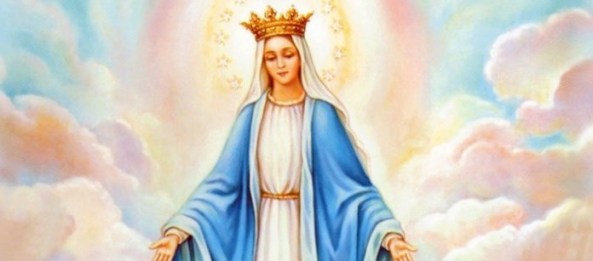
At the end of the Holy Eucharist, the parishioners renewed their Act of Dedication to the Blessed Virgin Mary, followed by floral offering and common meal.

The Immaculate Conception Parish in Aluba is being administered by the Priests of the Sacred Heart of Jesus (SCJs) since June 1, 2011. At present Fr. Janusz Burzawa is the Parish Priest and is assisted by a deacon Rev. Ruel C. Paalisbo, SCJ.

Installation of the new Parish Priest in San Lorenzo Ruiz Parish

On July 21, 2018 Most Rev. Antonio R. Tobias, D.D. the Bishop of Novaliches Diocese installed Rev. Fr. Niño B. Etulle, SCJ as second SCJ Parish Priest of San Lorenzo Ruiz Parish, Tierra Verde Homes I, Brgy. Culiat, Tandang Sora, Quezon City.

The celebration started at 5:00PM that lasted for one hour and thirty minutes. There were more than 200 people attended the installation. A good number of Parishioners and leaders from the different organizations of San Lorenzo Ruiz Parish attended the celebration together with the cooperation of some religious men and women coming from different religious congregation, guests, family members and close friends of Fr. Niño and SCJ’s coming from different communities were present to witness the installation.

The celebration ended with simple dinner prepared by the Parish Pastoral Council of San Lorenzo Ruiz Parish.

By: Fr. Joseph Butlig, SCJ

Episcopal Ordination in Cagayan de Oro

On June 7, 2018, the Archdiocese of Cagayan de Oro celebrated the Episcopal Ordination of Fr. Raul Dael, SSJV. Fr. Raul is the third priest from the archdiocese, who became bishop. The other two are Bp. Jose A. Cabantan, DD, the Bishop of Malaybalay and Bp. Vilsom Basso, SCJ, who was assigned in the archdiocese when he was called to become a bishop in Brazil.

The new bishop, was on September 29, 2014, giving a spiritual input to the SCJs, who were starting their 1st Regional Assembly in Cagayan de Oro City. In his talk, Fr. Raul emphasized the mercy of God and the importance of being priests and religious after the Heart of Christ.

The main consecrators of Fr. Raul as bishop were: Cardinal Luis Antonio Tagle, DD,  from the Archdiocese of Manila, Archbishop Antonio Ledesma, SJ, DD, archbishop of Cagayan de Oro and Bishop Nereo P. Odchimar, DD, JCD,  bishop emeritus of the Diocese of Tandag, Surigao del Sur, who is being replaced by the new bishop Raul.

The celebration was attended by 30 Cardinals, Archbishops and Bishops, hundreds of priests from different archdioceses and dioceses and many people. The celebration that lasted three hours was beautifully prepared. The new bishop and people of Cagayan de Oro and their guests enjoyed also a meal together and the very nice weather.